

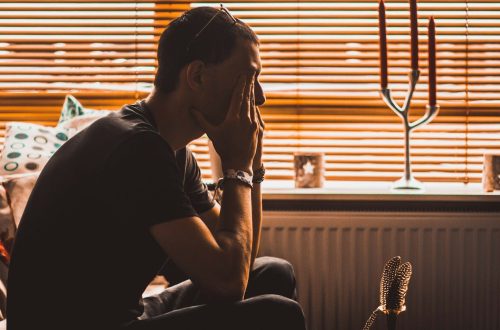
Let’s get one thing out of the way: you’re not being dramatic. That tight, restless feeling that shows up on Sunday evening, when nothing is actually due for another twelve hours, is real, common, and studied.
Call it phantom work anxiety. The work isn’t happening, but your body is reacting as if it is. Most of us know it by a different name, the Sunday scaries, and there’s interesting research behind why it hits so hard.
What Are the Sunday Scaries, Exactly?
They’re anxiety or dread about the coming workweek, usually showing up the day before it starts. Merriam-Webster lists “Sunday scaries” as a slang term. Psychologists would call what’s going on anticipatory anxiety: worry about something that hasn’t happened yet.
It isn’t a formal diagnosis. It’s a very common, very human experience, and your body can treat an imagined Monday a lot like the real thing.
How Many People Feel It?
It depends on who’s counting, and most of the numbers come from companies, not academic researchers. An Adobe-commissioned survey of about 1,000 U.S. full-time employees found that 82% had experienced it. Other surveys I came across put the number closer to 60%. That’s a wide range, so I’d treat all of it as “a lot of people” rather than a precise figure.
What Does the Research Say About Your Body?
The best scientific evidence I found is a 2025 study in the Journal of Affective Disorders, led by Tarani Chandola at the University of Hong Kong. It drew on more than 3,500 adults aged 50 and older taking part in the English Longitudinal Study of Ageing. Hair samples reflect cumulative stress hormone exposure over about two months, and people who reported feeling anxious on Mondays had 23% higher cortisol in those samples than people who reported anxiety on other days. According to the university’s release, the effect held for retirees too.
Here’s a detail I find fascinating. Only about a quarter of the Monday effect came from people simply feeling more anxious on Mondays. The rest came from anxiety seeming to have a bigger physical impact on Mondays than on other days. Chandola described Mondays as a cultural “stress amplifier,” suggesting the rhythms of the week may be built into our physiology.
A few caveats before you panic. This study measured Monday anxiety, not Sunday. It looked at older adults, not the typical hybrid worker. It’s observational, so it shows an association, not a cause. And hair cortisol can’t tell us whether cortisol spikes on a particular day. It’s a clue, not a verdict.
Where Does Your Inbox Come In?
Researchers at Colorado State University found that after-hours email was a significant stressor, and that the expectation of messages alone was enough to contribute to emotional exhaustion, no matter how much time people actually spent on email.
That matters if work lives on the same phone as your weekend. A study of after-hours work email and wellbeing, covering the period before and during COVID-19, found that the effects were stronger for people who were required to work from home. When the office is in your living room, it’s much harder to switch off.
What Don’t We Know Yet?
You’ll see claims online about what “micro-stresses” do to your brain. I looked, and I couldn’t find solid research tying small daily work stressors to specific changes in the brain. What the evidence does support is narrower: stress hormones, sleep, and the ability to mentally detach from work. I’d rather tell you that than invent something.
A Weekend Game Plan That Fits the Research
None of this is medical advice, but here’s how I’d spread out the small habits that seem to make sense, starting before the dread even begins.
Friday afternoon. Close the loop. Jot down your top three tasks for Monday so your mind doesn’t have to keep holding them all weekend.
Saturday. Set a hard stop. Mute work notifications once the workday ends, especially on weekends, since even expecting a message seems to wear people down.
Sunday evening. Give the night something to look forward to, like a dinner, a walk, or a show, and keep your sleep schedule close to what it is on weekdays. Big swings between weekday and weekend bedtimes can make Sunday night rougher.
Monday morning. Notice what happens. For most people, Sunday dread eases once Monday gets going. If the anxiety follows you all week, that’s worth talking to a doctor or therapist about.
The Bottom Line
Phantom work anxiety isn’t in your head in the dismissive sense. It’s your stress system rehearsing for a week that hasn’t started. You can’t always make it vanish, but protecting your off-hours and giving your mind a plan can take the edge off.
For more on why we think, feel, and behave the way we do, visit our Psychology section.



One comment on “Why You Get “Phantom Work Anxiety” on Sundays (and What Your Body Is Doing About It)”
Comments are closed.