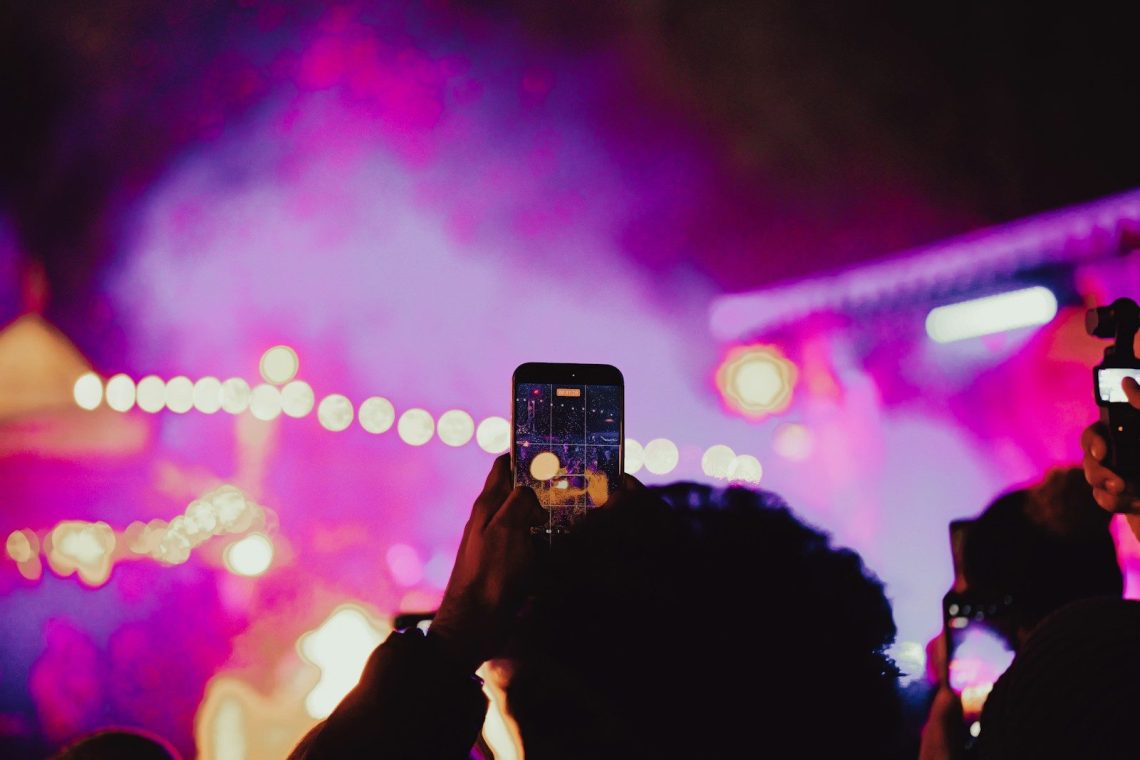
Here’s a question worth asking at your next concert: who is the show actually for? The people in the room, or the people who’ll watch a 15-second clip of it on their phones tomorrow?
Increasingly, the honest answer is both. And production teams have started designing for the second group from the very first sketch. The best way to see how that happened is to follow it in order.
What “Designed for the Feed” Actually Means
It doesn’t mean every concert is secretly a TikTok video. It means that for some shows, designers ask a new question early in the process: What will this look like through a phone? The stage, the screens, the lighting, and even the camera positions get planned with a second audience in mind.
2021: A Livestream Made for the Vertical Screen
Ed Sheeran performed a livestream built specifically for TikTok users. In an interview with Billboard, his creative team said the phone’s vertical framing was the biggest thing shaping the production. They didn’t want to film a regular live show and crop it afterward. According to TikTok, the show went on to inspire more than 400,000 fan videos.
2023: Video Towers in the Shape of a Phone
Two years later, in December 2023, TikTok put on its first live global music event, called In the Mix, at Sloan Park in Arizona. According to Set Design Magazine, design firm Yellow Studio built four giant video towers around the main stage in the 9:16 aspect ratio, which is the shape of a phone held upright.
That’s a big shift from the usual wide, horizontal stage. These towers were meant to look right in the format people actually watch on.
Now: Two Audiences, One Stage
This one comes from just the past few weeks. For Head Trip, a one-time festival livestreamed by Apple Music, designer Pissenem (whose company High Scream built the stage) told Billboard that making a show for 90,000 people on the field and for viewers online meant planning for both at once. His design presentation even included renderings of how the stage would look in a phone’s portrait mode.
He also pointed out that a show for social media, a livestream, and a live crowd are really three different jobs.
Beyond the Stage: Buildings Built for Capture
It’s not just stages anymore. Apple recently opened Apple Music Hall at its London headquarters, according to Engadget. The intimate venue holds up to 600 people, and it has 16 camera locations and a control room built to support iPhone video capture. It’s made for the people in the room and for audiences who can’t be there.
Why Is This Happening?
Mostly because that’s where the audience is. Deloitte’s 2025 Digital Media Trends survey found that 56% of Gen Z find social media content more relevant than traditional TV shows and movies. A clip that spreads on someone’s feed works as free promotion, and for a younger audience it may be the first (or only) way they ever see a show.
So production teams are doing what any good designer does. They’re designing for where the eyeballs are.
Is That a Good Thing?
Honestly, it depends on who you ask. The upside is that more people get to experience a show, and a well-designed one can look stunning on any screen. The downside is the nagging question of whether you’re experiencing a concert or helping someone else film it.
Not everyone is thrilled with the trend, either. Some artists have gone the opposite way with phone-free shows, asking fans to put their devices away for the night. That might tell you more about how far the pendulum has swung than any survey could.
How to Spot It at Your Next Show
Once you know what to look for, you’ll probably start noticing it. Keep an eye out for tall, vertical screens instead of only wide ones. Watch for one big “moment” that looks built for a short clip, like a lighting reveal or a confetti drop. Notice whether the camera operators seem as important to the show as the band, and whether the color is bold and high-contrast in a way that reads well on a small screen.
These are my observations, not hard rules, and plenty of shows still look the way they always did. But once you start noticing, it’s hard to stop.
Want more on how screens and feeds are reshaping entertainment? Head over to our Media Analysis section.